

An unspoilt land
The hilly Tuscan Maremma is a still unspoilt territory, far from mass tourism, sparsely populated and unexpectedly rich in unique attractions.
Its heritage spans over 3,000 years of history, from thermal hot springs and medieval villages to culinary traditions and an ancient wine culture.
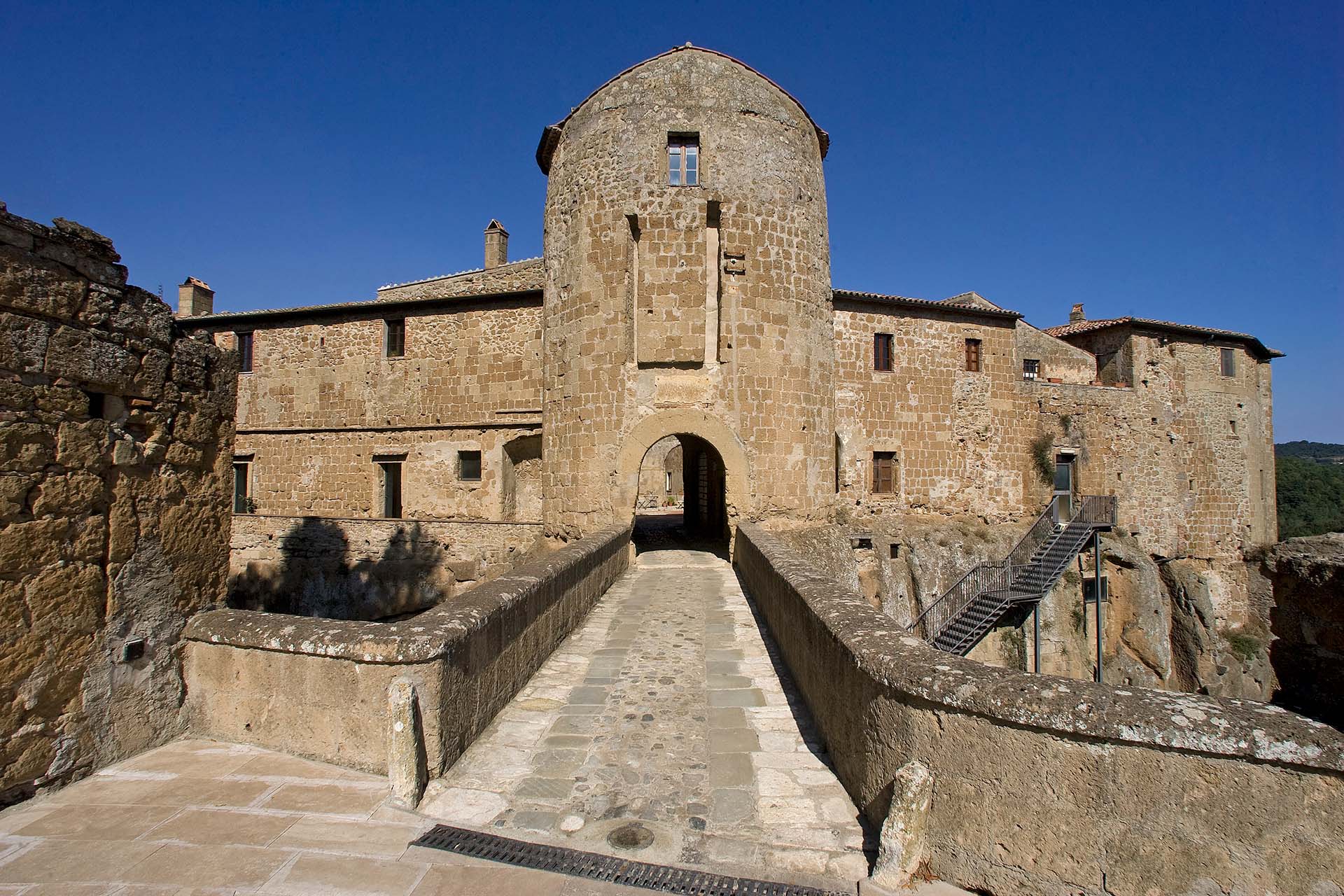
Sorano
Sorano was originally an Etruscan settlement, although little is known about its early history; archaeological remains and tombs still bear witness to its origins. In the Middle Ages, it became part of the County of Sovana under the Lombard Aldobrandeschi family. In 1293, the County of Sovana passed by inheritance to the County of Pitigliano under the Orsini family. In 1331, Sovana was conquered by the Republic of Siena, and in 1604 Gian Antonio Orsini sold the County of Pitigliano to the Grand Duchy of Tuscany.
The Fortezza Orsini (Fortezza di Sorano) originated as an Aldobrandeschi stronghold in the 12th century. It withstood numerous sieges over time and was later renovated in 1552 by Count Niccolò IV Orsini.
Tickets
The full ticket for the Museum of the Middle Ages and the Fortezza Orsini costs €4. A combined ticket (€8) also includes: the Museo delle Monete d’Oro in Sovana, Palazzo del Pretorio in Sovana, the Etruscan Necropolis of Sovana, and other archaeological sites in the Sorano area.
Guests of Sovana Hotel & Resort can access it for €5 (please ask at reception)
Opening hours
29 March – 6 October: 10:00–13:00 and 15:00–19:00
7 October – 3 November: 10:00–13:00 and 15:00–18:00
8 October – 28 March: 10:00–13:00 and 14:00–17:00 (weekends only)
Closed on Mondays (except public holidays and August). Special openings during the Immaculate Conception holiday period and from 26 December to 6 January.
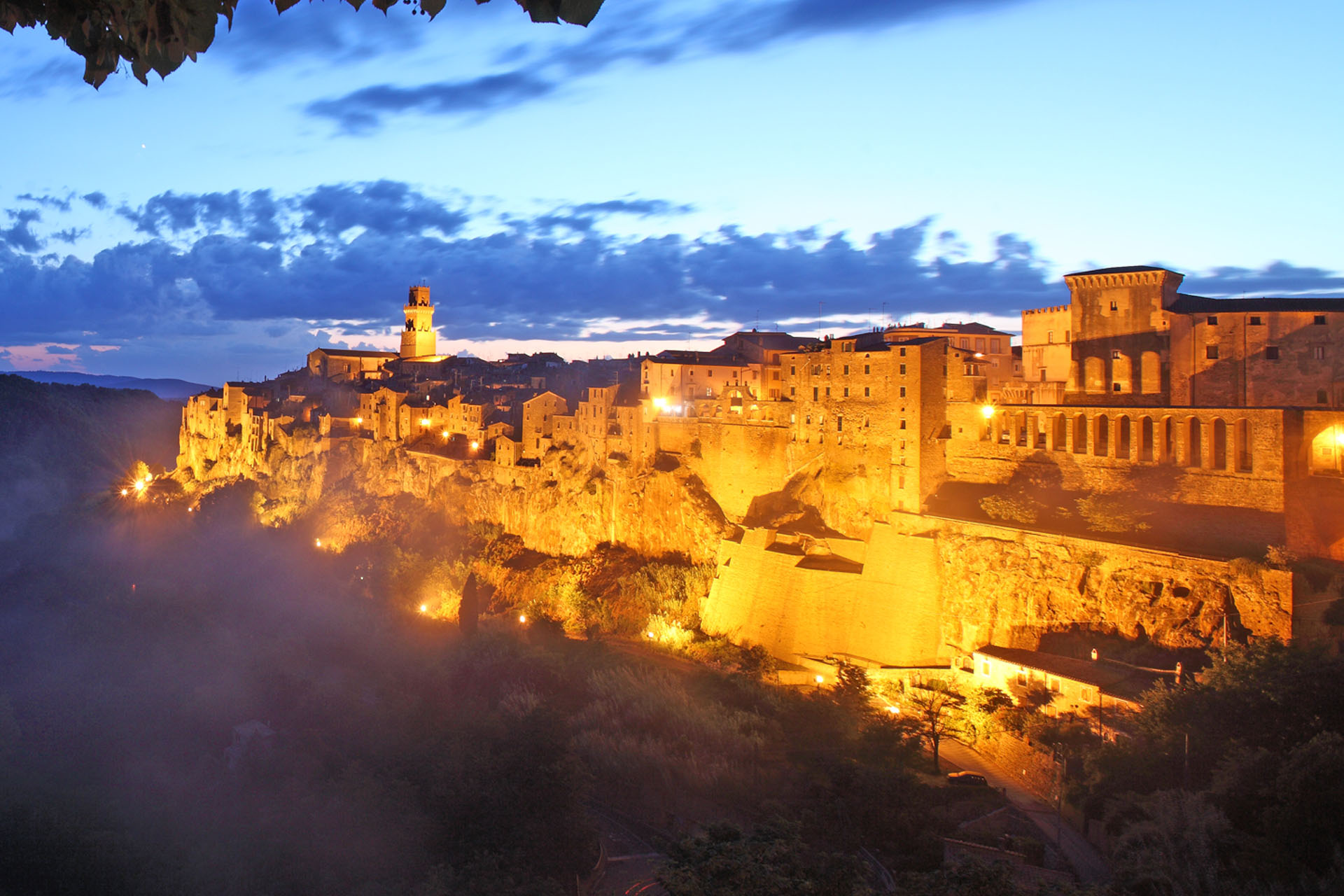
Pitigliano
Occupied since the Bronze Age (12th century BC), later an Etruscan centre, and then part of the Aldobrandeschi County of Sovana, Pitigliano became, in 1331, the capital of the County of Pitigliano under the Orsini family, who transformed the medieval fortress into the impressive Palazzo Orsini in the 16th century, now a museum.
Pitigliano is located just 7 km from Sovana and sits atop a large tuff cliff.
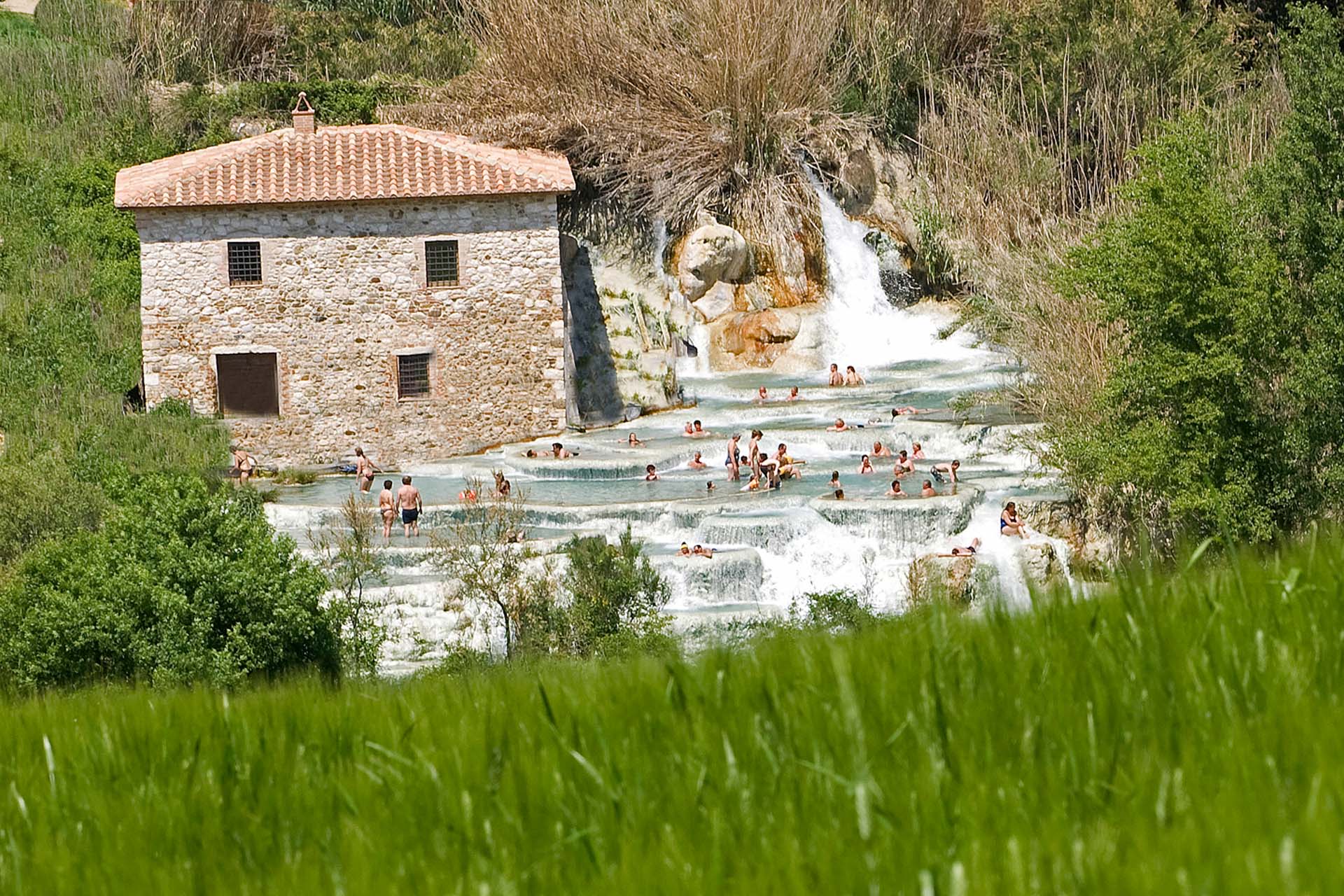
Saturnia
Just a few kilometres from Sovana, the Saturnia hot springs are one of the most fascinating natural wonders of the Maremma.
The famous Cascate del Mulino, with their naturally warm sulphurous waters flowing at 37°C, offer an open-air wellness experience in every season.
Immersing yourself in these natural pools carved into the rock means regenerating body and mind, surrounded by greenery and the soothing sound of flowing water.
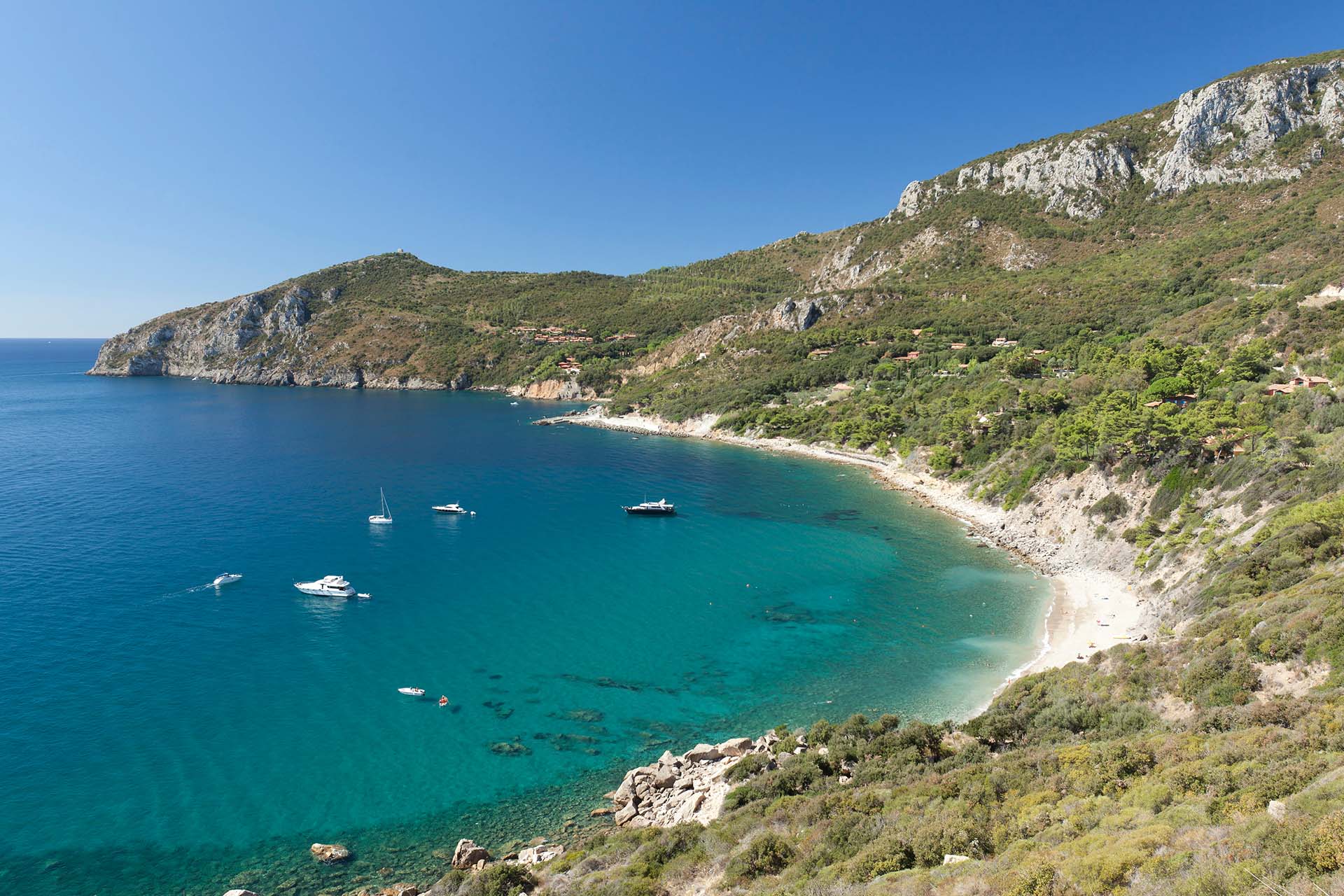
Argentario
To reach Monte Argentario, the Tuscan sea, you travel 51 km from Sovana along the SR 74, the famous “Maremmana” road, arriving in Albinia.
From Albinia, within a few kilometres you find Orbetello, Porto Santo Stefano, Porto Ercole, and Ansedonia. Heading north, Talamone, the Maremma Regional Park, Principina a Mare, Marina di Grosseto, and Castiglione della Pescaia.
From Porto Santo Stefano, a one-hour ferry connects you to Isola del Giglio.
Once an island itself, Monte Argentario was joined to the mainland by two tombolos (narrow strips of land connecting islands to the mainland): Giannella, on the Porto Santo Stefano side, and Feniglia, on the Porto Ercole side.
Between them lies the Orbetello lagoon, where the town was later founded.
The Tombolo di Giannella is the more developed one and hosts the road connecting Albinia to Porto Santo Stefano.
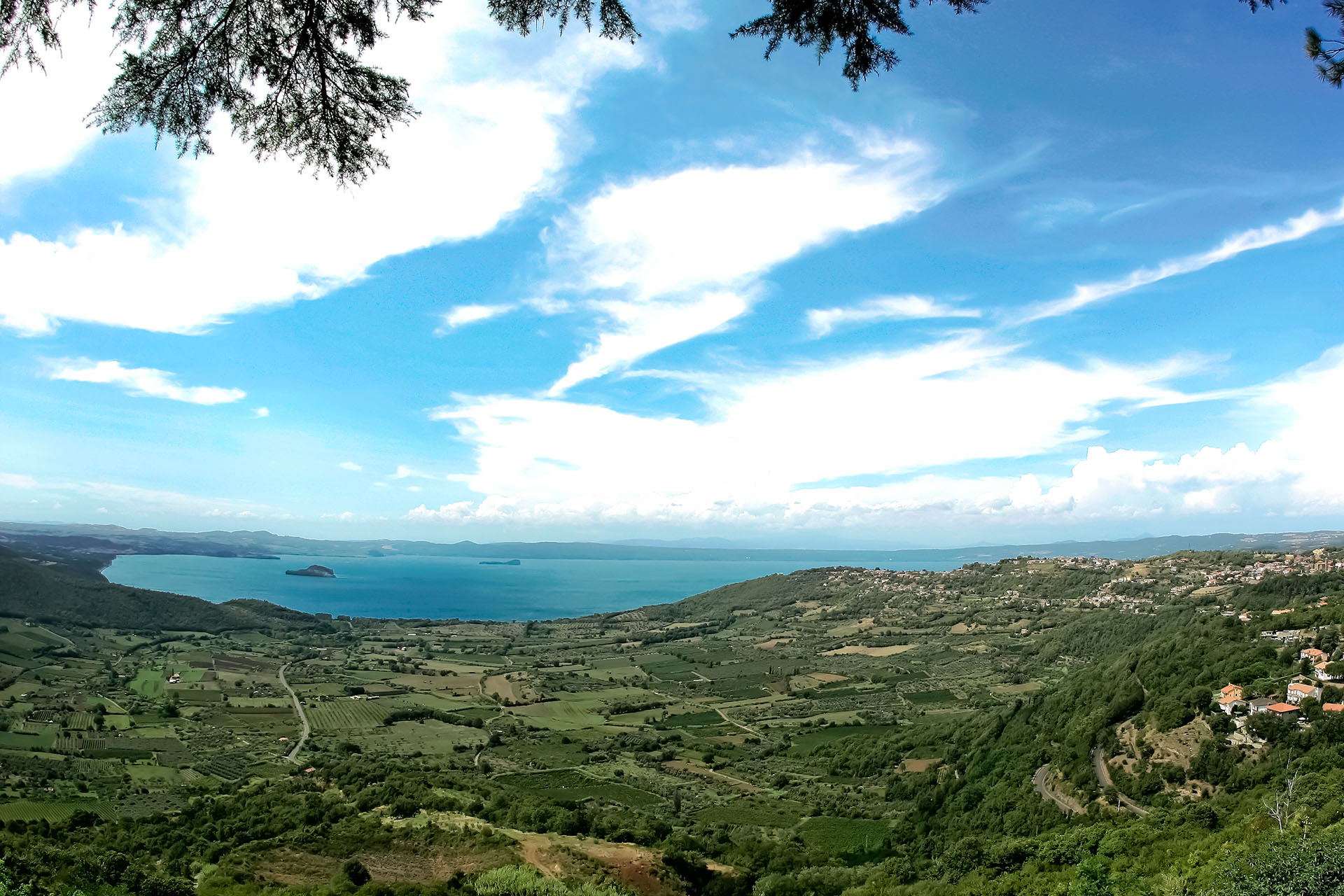
Lago di Bolsena
The Lago di Bolsena, he largest volcanic lake in Europe, is an ideal destination for those seeking tranquillity, breathtaking landscapes, and authentic flavours.
Its shores host historic villages such as Bolsena, Marta, and Capodimonte, perfect for scenic walks, boat trips, or lakeside dining.
The clean waters invite swimming and water sports, while local restaurants serve traditional dishes such as grilled “coregone” (whitefish).
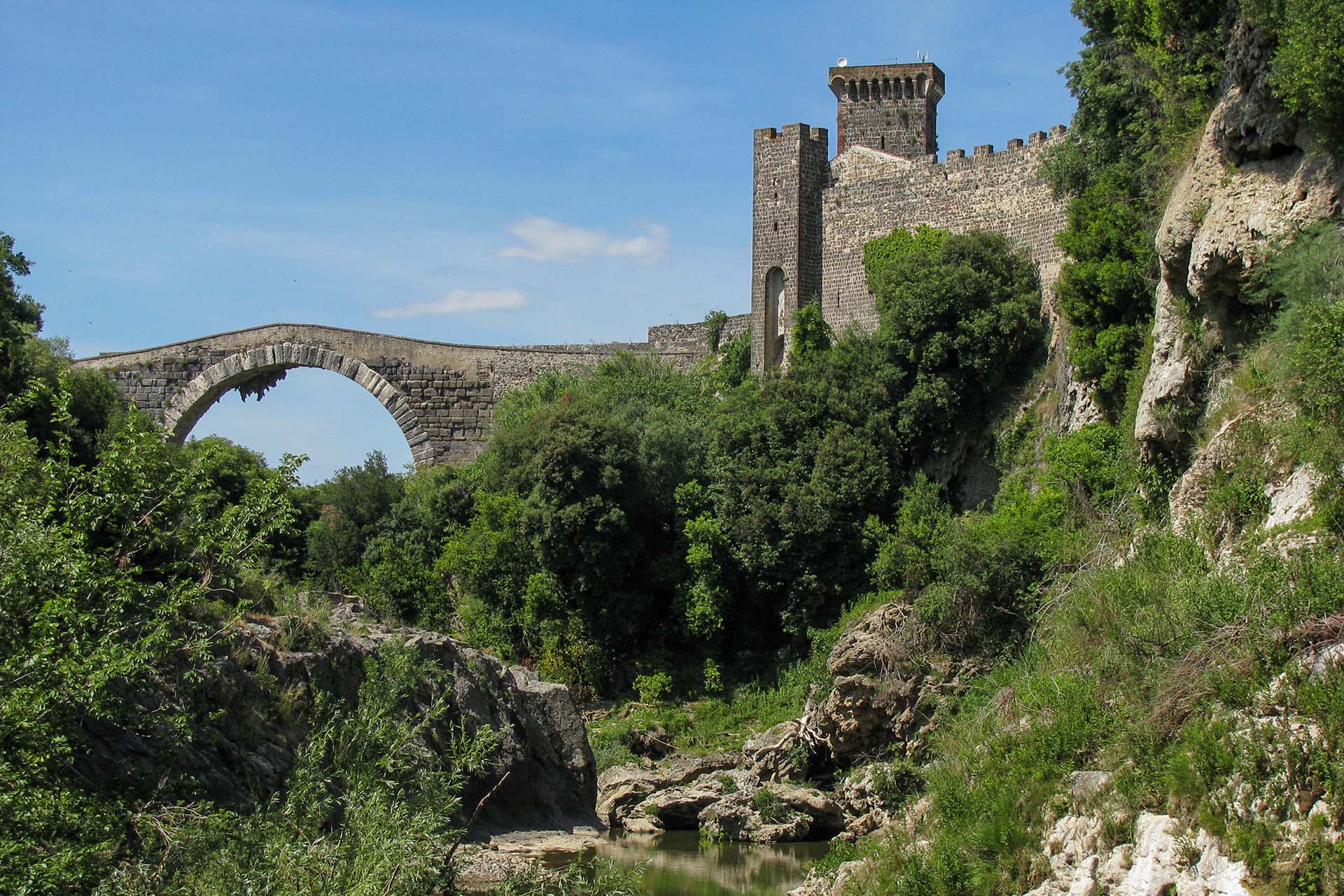
Vulci
A place where history and nature blend in perfect harmony.
The Vulci Archaeological Park preserves the remains of an ancient and powerful Etruscan city, with monumental ruins, necropolises, temples, and an impressive Roman bridge spanning the Fiora river gorge.
A journey through ruins and nature trails in a wild and fascinating landscape, ideal for archaeology lovers and walkers.
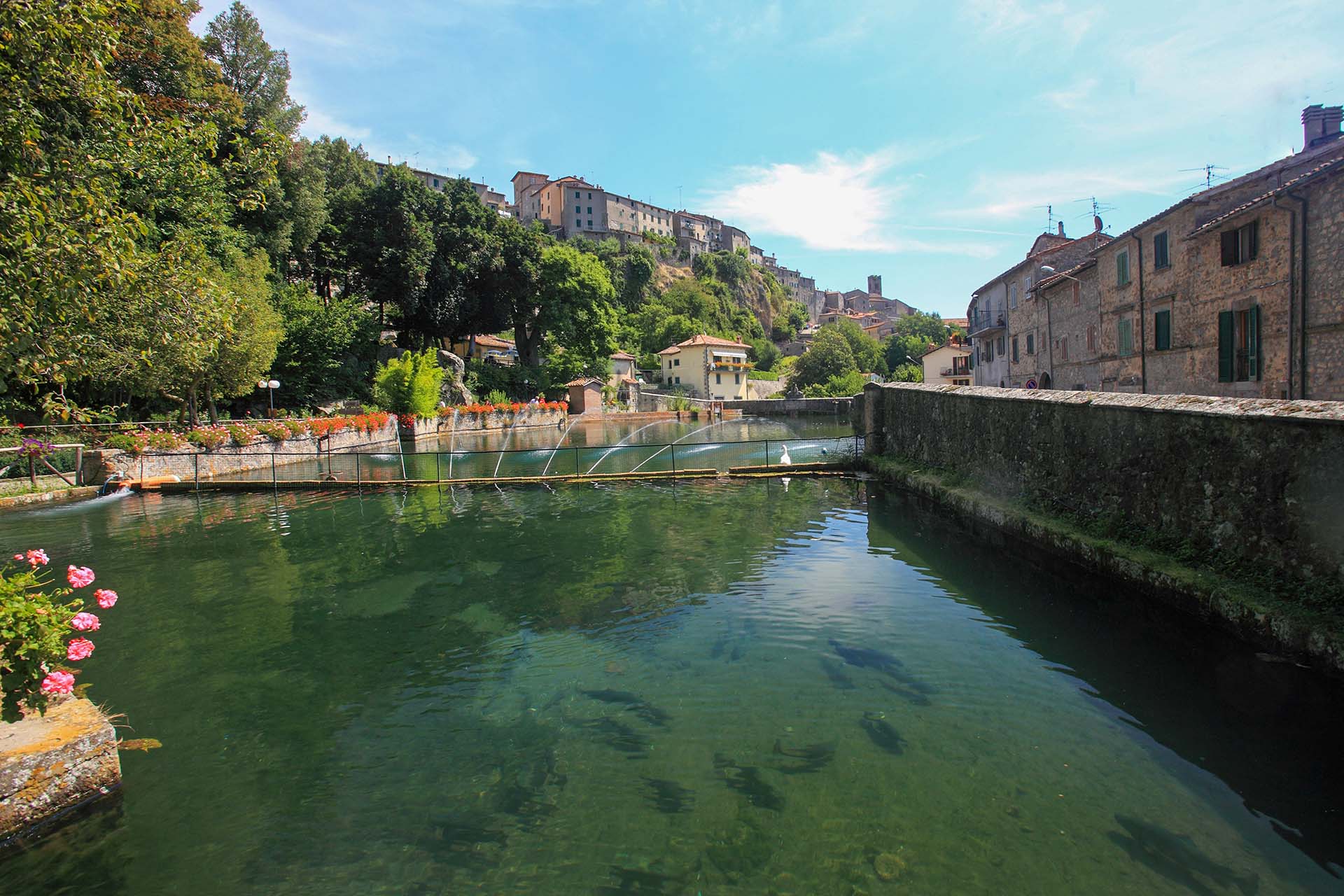
Monte Amiata
Rising above southern Tuscany, Mount Amiata is an ancient volcano transformed into a green paradise.
Its beech and chestnut forests, scenic trails, and charming mountain villages offer authentic experiences throughout the year.
In summer it is perfect for hiking and cool temperatures, in autumn for chestnuts and mushrooms, and in winter for snow days.
A place where you can rediscover a slower rhythm, in close contact with nature.
Book direct & save!
Book on our official website and enjoy the best rate guaranteed, with no intermediaries or commission fees.
No deposit required, and free cancellation up to a few days before arrival.